
TSEL Summit 2026 Inaugural Gathering
Join us for a summit designed for educators, district leaders, and higher education partners committed to deepening Transformative Social Emotional Learning (TSEL) in Oregon. There will be opportunities to engage in conversation, reflect on shared experiences, and transform the SEL practice together.
For educators and district leaders.
Tuesday, August 4, 2026
8:00 AM – 4:00 PM
Hidden Creek Community Center
Hillsboro, OR
Sessions
8:00-8:15am – Welcome
8:15-9:45am – Keynote Address
10:00-11:15am – Concurrent Sessions
Student Voices: Belonging, Relationships, and Learning
Christa Pruss – 6th grade teacher, Hillsboro School District & Co-Founder of Confidence Coaches 4 Kids
Student Speakers
Join us for an engaging student panel where students share their perspectives on belonging, relationships, and how these experiences shape their academic journey. Hear directly from students about what helps them feel connected, supported, and successful in school. This session will provide dedicated time to listen to student voices, gain valuable insights, and ask questions as students reflect on the impact of school culture, relationships, and community on their learning experiences.
— Elementary Education, Secondary Education, Leadership
From Survival to Success: Grounding TSEL in Neuroscience, Trauma Informed Practice, and Conditions for Learning
Lindsey Pratt – Licensed School Psychologist & Professional Learning Coach, Northwest Regional ESD
Neha Hertzog – Licensed School Social Worker & School Safety and Prevention Specialist, Northwest Regional ESD
This session explores the connection between behavior and the brain, beginning with an overview of basic brain science and typical development. We’ll examine current neuroscience research that helps explain why students respond the way they do in school and consider practical, brain-based strategies that support regulation, connection, and learning grounded in the Oregon TSEL Framework.
— Secondary Education
Designing Safe Linguistic Spaces: How Scaffolding Structured Talk Lowers Vulnerability and Builds Trust for LTELs
Nicole Mito Ahern – K-12 Bilingual Programs Teacher on Special Assignment, Hillsboro School District
Speaking a developing academic language requires immense emotional vulnerability, often causing Long-Term English Learners (LTELs) to opt for silence. This interactive session demonstrates how pairing robust linguistic scaffolds with intentional tSEL checkpoints creates a predictable, emotionally safe classroom climate. Participants will walk away with practical protocols that lower the affective filter, honor student identity, and build the collective trust necessary for academic risk-taking.
— Secondary Education
Getting SEL Implementation Right
Dr. Sheldon Berman – Interim CEO of CASEL, AASA’s Lead Superintendent for Social-Emotional Learning
SEL’s impact on student outcomes is only as effective as the program’s implementation. Yet, until recently there has been little research on what constitutes effective SEL implementation. Based on in-depth studies of systemic implementation of SEL in rural, suburban, and urban districts, this session will offer insights into the variety of strategies, programs, and infrastructure supports that have led to greater depth in systemic SEL implementation, better integration with academic content, more significant investment among faculty, and more successful outcomes for students. It will also identify the potholes and roadblocks that plague implementation and how to avoid them.
— Elementary Education, Secondary Education, Leadership
Transformative SEL Development & You
Lauren Vega O’Neil , Ph.D. – Associate Professor, Lewis & Clark College
Lina Darwich, M.Ed., Ph.D. – Associate Professor, Portland State University
This session covers the core phases of SEL development across the lifetime. You will explore the personal considerations of enacting transformative SEL in the classroom while while bearing in mind your students’ development. Core topics such as identity development, self awareness, self regulation, and emotions regulation will be highlighted.
— Elementary Education, Secondary Education, Leadership
Book Recommendation
11:30am-12:45pm – Concurrent Sessions
Building Thinkers and Learners: SEL in Mathematics
— Elementary Education
Christa Pruss & Kasia Gutierrez – Co-Founders of Confidence Coaches 4 Kids
Discover how Social Emotional Learning and mathematics work together to support student success. In this interactive session, participants will explore the connection between CASEL’s competencies and the 8 Mathematical Practices, experience a sample math lesson that intentionally integrates SEL, and learn practical strategies for effectively implementing SEL standards in mathematics instruction. Participants will leave with actionable ideas for fostering both mathematical thinking and social emotional growth in their classrooms.
— Elementary Education
Launching the Year with Three Student Needs in Mind
Marie-Claire Wonacott – SEL Instructional Coach, North Clackamas SD & SEL4OR Chair
David Streight – Education Editor at Center for Self-Determintation Theory
Fifty years of research with proven motivation results for kids of all ages, from all kinds of cultures! And the earliest days of the school year offer the most powerful window for getting it all started. We’ll focus on the whats, whys, and how to’s of starting the year with tSEL-focused practices that make a difference in both academic and social-emotional growth. With lots of practical examples, we’ll take an in-depth look at why students not only need effective competencies for tSEL success, but also why students’ sense of autonomy plays an essential role in fostering “intrinsic” motivation for transformative practices; and of course the importance of a sense of “belonging” in the group, which holds all our work together.
— Elementary Education, Secondary Education, Leadership
TSEL Resource Spotlight: Exploring MESD’s Thinking Critically: Media Literacy and YOU Toolkit
Maria Scanelli – Paraeducator Professional Learning Specialist-Mental/Behavioral Health Multnomah ESD
The rapidly changing digital world is reshaping our relationships and educational systems, making critical thinking essential for learning, deep reflection, and challenging the status quo. This session introduces MESD’s ‘Thinking Critically: Media Literacy and YOU’ toolkit, designed to strengthen media literacy and critical thinking skills for individuals and educators. This session will include a brief overview of the toolkit, highlighting the Transformative SEL (TSEL) content, followed by time for self-guided exploration of vetted, ready-to-use classroom resources.
— Elementary Education, Secondary Education, Leadership
Book Recommendation
Leading from the Inside Out: Regulating Ourselves to Support Others
Jo Linden – Founder of Linden Connects
Whether you’re a leader in the classroom or outside of it, the state of your nervous system is shaping the experience of those around you more than you realize. In this session, we’ll explore how state awareness and self-regulation form the foundation of grounded leadership, and why tending to ourselves first isn’t a luxury, but a prerequisite for supporting others. Leave with a deeper understanding of your own nervous system, and practical tools for building the inner capacity to lead from a grounded state.
— Elementary Education, Secondary Education, Leadership
Book Recommendation
Still Showing Up: Moral Injury & Active Hope for Educators
Cassie Stafford – Licensed Clinical Social Worker and Coordinator of School Safety and Mental Health at Willamette ESD
This reflective, interactive workshop invites educators into a shared exploration of moral injury—the ethical tension that arises when we know what students need but face systemic barriers to meeting those needs. Through a guided activity and collective reflection, participants will connect with one another while cultivating greater agency and a renewed sense of purpose in their work. Grounded in the belief that naming our experiences matters, this session creates space for reflection, affirmation, and re-centering the meaning and possibility in our work.
— Leadership
12:45-1:45pm – Lunch
2:00-3:15pm – Concurrent Sessions
A Foundation of Equity: Adult Self-Awareness and Culturally Responsive SEL
Tami Larson – Instructional Coach, North Clackamas School District
Move into action by exploring the integration of racial equity, adult well-being, and student SEL. Deepening educator self-awareness, knowledge, and responsible decision-making creates the foundation for authentic, culturally responsive practices. Come ready to examine examples and utilize dedicated time to adapt these resources for application in your own role.
— Elementary Education, Secondary Education, Leadership
Book Recommendations
Structures, Routines and Regulation
Erica Barnett – 4th Grade Teacher, Beaverton School District
This session shares how SEL can be integrated into your daily routines and structures. These practices can be implemented immediately into your elementary classroom, are driven by the CASEL competencies and help students have autonomy, a sense of belonging and feel competent.
— Elementary Education, Secondary Education, Leadership
SELintersection: Weave it in
Dr. Jenni Newton – CASEL Fellow
Secondary students may scoff at SEL lessons and research indicates that all students can continue developing skills that are core for college and career readiness. Look at building lessons for any content area with a lens that emphasizes transformational social and emotional learning to prepare for a successful transition out of K-12 education and into life. Use strategies teachers already know but with evidence-based intention to heighten engagement and increase learning.
— Secondary Education
Book Recommendation
TSEL Skills Are Academic Skills: Designing Instruction That Develops Both
Kristina Meinecke – Student Success Coach, Forest Grove School District
This session will explore how educators can intentionally develop Transformative SEL (TSEL) skills through everyday academic instruction across content areas and grade levels. Participants will examine practical instructional strategies, planning processes, and classroom structures that build engagement, discourse, collaboration, problem solving, and learner agency while strengthening academic outcomes. Using examples from elementary and secondary classrooms, this session will help educators move beyond viewing SEL as a separate program and instead design experiences where academic and TSEL skill development happen together.
— Elementary Education, Secondary Education, Leadership
Book Recommendations
Self-Compassion Responsibility & Systemic Change: Modeling Transformative SEL for Educator Wellness
Miranda Tucker – Licensed School Counselor, Willamette ESD
Educators are burning out, not because they don’t care enough, but because systems aren’t designed for them to thrive. In this interactive session, we’ll use Oregon’s Transformative SEL Framework to build personal resilience through the use and discovery of how the same social-emotional skills we teach students can help us as educators recognize secondary traumatic stress, build genuine belonging, and develop the agency to push for systemic change.
— Leadership
3:30-4:00pm – Closing
Keynote speaker
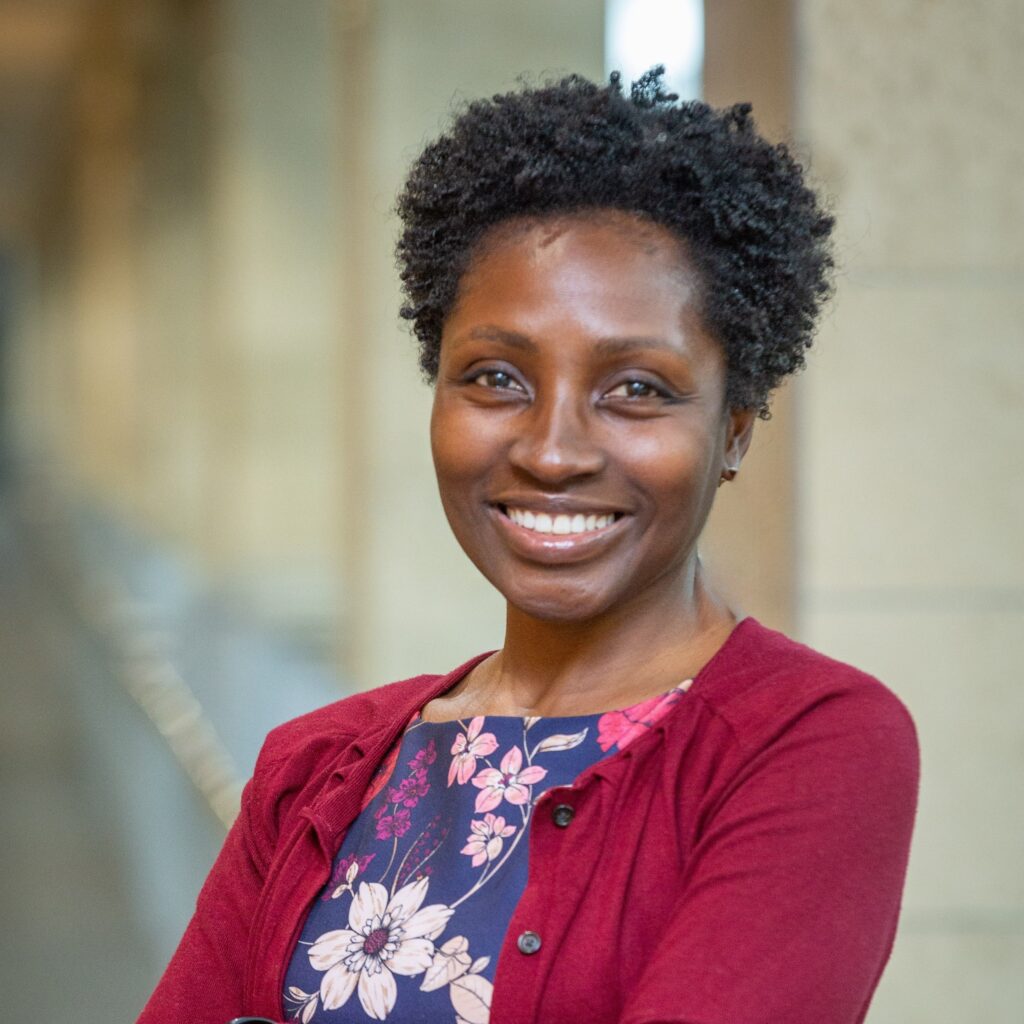
DR. Bloodine Barthelus, Ed.D.
Dr. Bloodine Barthelus is the Founder and CEO of Wellness Embodied LLC, a boutique firm dedicated to reducing burnout and building sustainable, human-centered workplaces. She began her career in the emergency room as an intake counselor, then went on to serve as a school counselor and senior leader in social-emotional learning and school climate. Today, she partners with education and human-serving organizations to support the people who hold everything together using research, lived experience, and our Framework for Sustainable Practice™ to help teams stay, grow, and thrive.
I before U: Transformative SEL From the Inside Out
Students thrive when they learn in spaces where they are seen, known, valued, and invited to contribute in meaningful ways. But those conditions do not start with students; they start with us. Through story, research, and reflective practice, this keynote invites educators and leaders to move beyond surface-level self-care and explore Transformative SEL through identity, self-compassion, and relational responsibility. Participants will leave grounded in the understanding that lasting change begins within and expands outward into classrooms, schools, and systems.
Book Recommendation
Frequently asked questions
How do I register for the event?
Thank you for your interest in joining us. We are at full capacity and are no longer taking reservations.
Are meals included?
We will provide a light breakfast of fruit and pastries and lunch for all attendees.
Lunch will include sandwiches with gluten and dairy-free options including:
- Ham and cheddar sandwich
- Club wrap
- Garden salad (vegan option)
Is parking available?
Yes, you may park at the Hidden Creek Community Center at no cost to you.
When and where is check-in for the event?
Plan to arrive between 7:30-7:55am for check-in. We will have a registration table set up for you to create your name tag.
In partnership with